
Decompression Illness (DCI) Explained
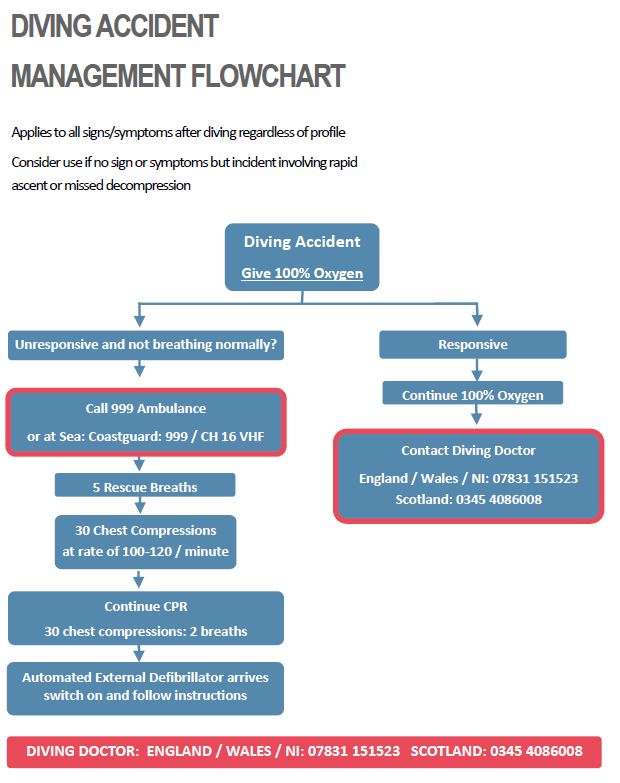
IMMEDIATE MANAGEMENT for Diving Casualty
Assess Airway & Breathing
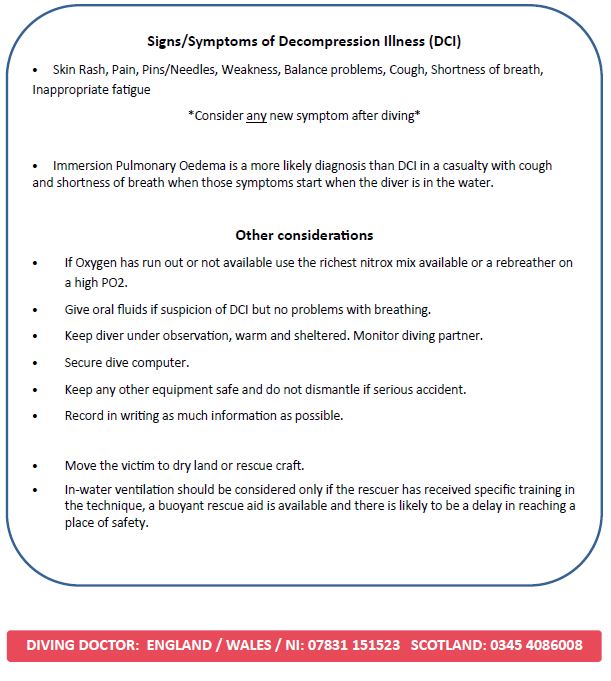
- Rapid ascent can lead to pneumothorax or emphysema
Administer 100% oxygen continuously as part of ventilation management
- Never administer Entonox to a person who is suspected of suffering from Decompression Illness (DCI or the bends).
- Continue oxygen therapy despite any apparent clinical improvement.
- Keep the patient warm and out of the wind.
Circulation
- Administer IV fluids: 1000ml 0.9% Saline (Hartmann’s if available)
- Administer PO fluids (non-caffeinated) if no IV access and the patient can tolerate oral fluids
- Monitor pulse and blood pressure
Disability
- Monitor level of consciousness
- Examine neurologically for any gross weakness or sensory loss
Other Points
- Symptoms can rapidly deteriorate. Reassess frequently for change.
- Do not give analgesia or other medication (except for resuscitation purposes) unless discussed with a Diving Physician.
If unstable, or problem is identified on the Primary Survey, discuss with a Diving Physician regarding transfer to a Hyperbaric Unit or nearest Emergency Department.
Oxyveda Healthcare on +91 9671770831 9255763766
BHA National Diving Accident Helpline on 07831 151 523
In Scotland call 0345 408 6008
At sea call the Marine Coastguard Agency on VHF Channel 16, DSC Channel 70 or call 999 and ask for the Coastguard
Related Content
UK Diver Evacuation Procedure
Evacuation and treatment of an emergency diving casualty in the UK
Diving Emergency
What to do in a diving emergency or if you suspect Decompression Illness (DCI) or 'the bends'. Who to call. How to manage a diving accident.
Emergency Treatment FAQ
Information on receiving Emergency Recompression Treatment for Decompression Illness (DCI) at our hyperbaric chamber.